Each workshop brought together municipal representatives, technical partners, and professionals from the construction and manufacturing sectors to explore opportunities for reclaiming wood, supporting circular value chains, and testing innovative approaches within the built environment. These activities are essential steps in co-developing strategies tailored to each pilot city, ensuring that Woodcircles solutions are rooted in local needs, capacities, and ambitions.
Second workshop in Tartu – 7 October 2025
The workshop was organised by URBASOFIA with the collaboration of City of Tartu and ICONS, and also UCAM and AUAS were involved.
In October we had the opportunity to visit the city of Tartu to organise the second local workshop within WP6 of the WoodCircles project and to take part in a local study visit. The workshop aimed to engage local stakeholders around the theme of the Urban Forest and the availability of reclaimed wood in the built environment. The discussions also focused on the potential role of introducing an Urban Sawmill in the local context and on the ongoing related projects.
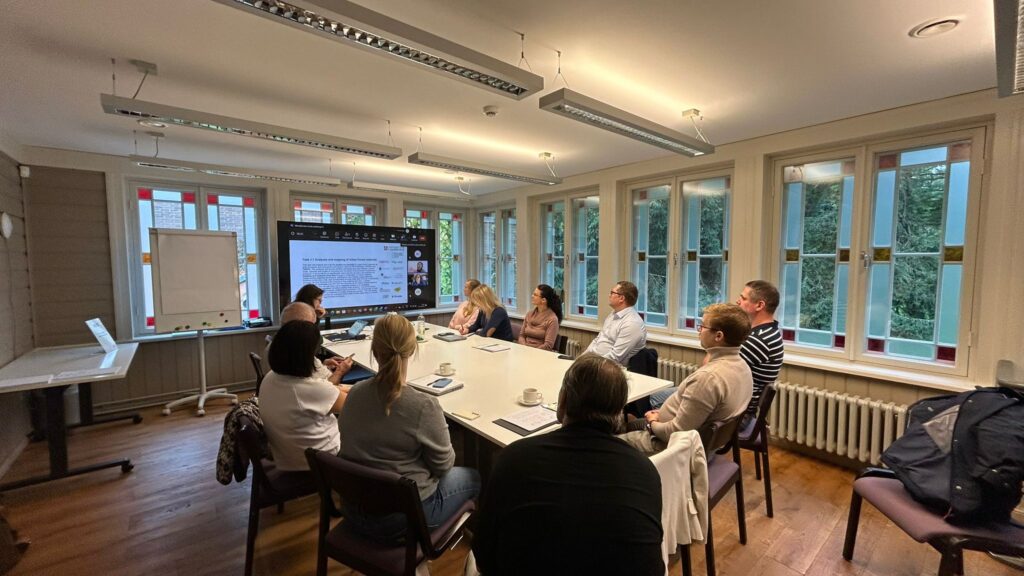
Participants during the workshop in Tartu
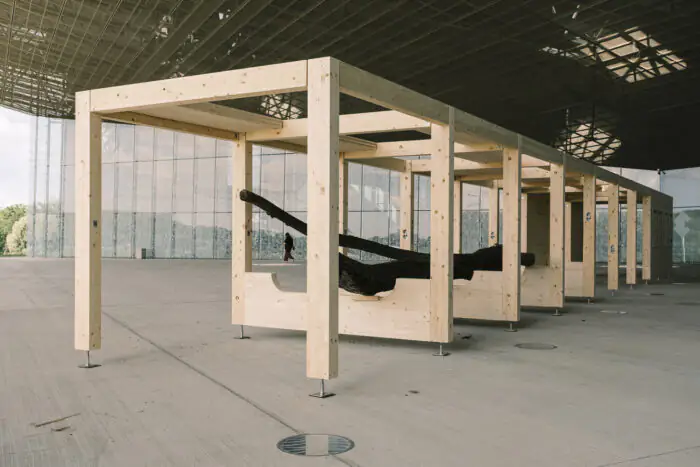
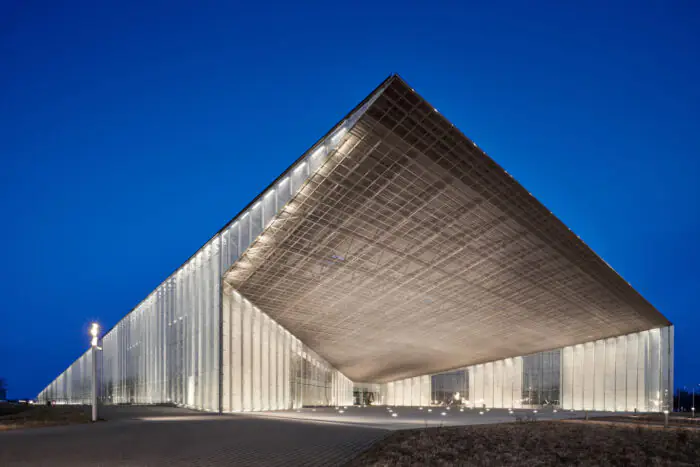
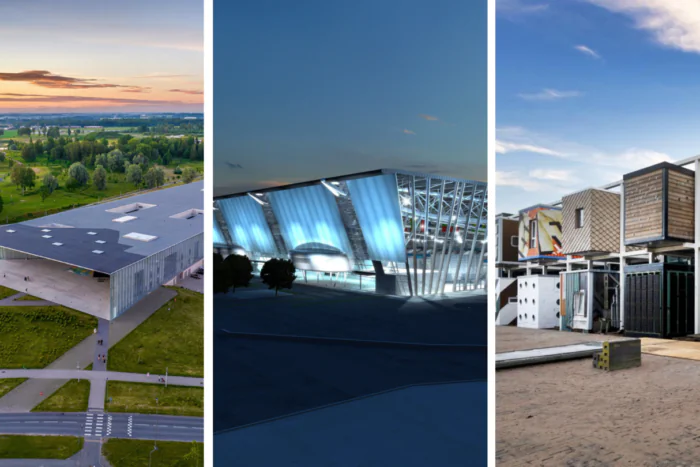
The activity involved also a local Tartu’s City Architect, Jiri Tinter, who gave a presentation about the new cultural center Siuru, as well as Martha Godina (UCAM) and Marta Malé-Alemany (AUAS), representatives of the WoodCircles technical partners, who presented the latest developments in their respective work packages, giving valuable contributions and presentations.
The workshop included a series of presentations followed by an interactive activity to map the “wood journey” in Tartu and the discussion of different scenarios related to the introduction of an Urban Sawmill. Participants explored which scenario could be the most beneficial, what advantages it might bring, and what changes would be required in terms of legal, economic, and social aspects—as well as which stakeholders would need to be involved.
The activity successfully brought together different types of stakeholders, around 13 people, fostering an engaging and fruitful discussion that will support our work in defining the next steps toward a more circular and sustainable construction sector in Tartu.
Second workshop in Turin – 30 October 2025
The workshop was co-organised with the strategic partners for the pilot city of Turin – the Municipality of Turin, Environment Park, IREN, and ICONS.
The event aimed to engage local stakeholders in discussing the project’s progress, exploring its innovations, and considering how these could be implemented within the local context.
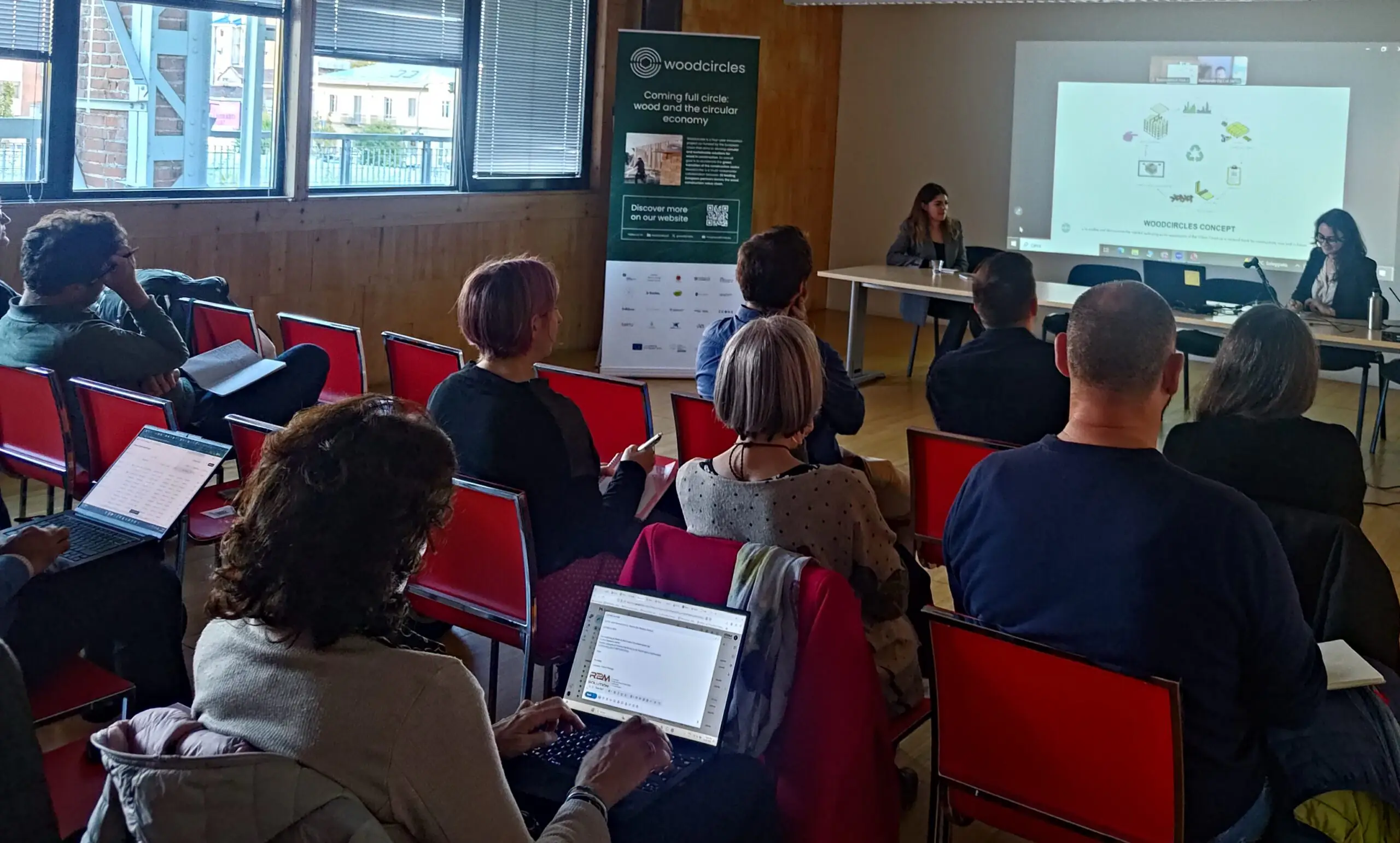
During the workshop, participants received an update on the latest project developments in Turin. The session also featured a presentation by Raimondo Da Cal from Waugh Thistleton Architects (WTA), showcasing innovations in design for assembly & disassembly (DFAD). In addition, discussions focused on the local regulatory framework and regional funding opportunities to promote circularity in the construction sector. The workshop saw high participation, with 23 attendees representing a variety of sectors, mainly manufacturing, construction, and local companies working with recycled wood. A valuable final discussion with stakeholders helped identify key barriers and opportunities that Woodcircles innovations may face when applied in Turin’s context.
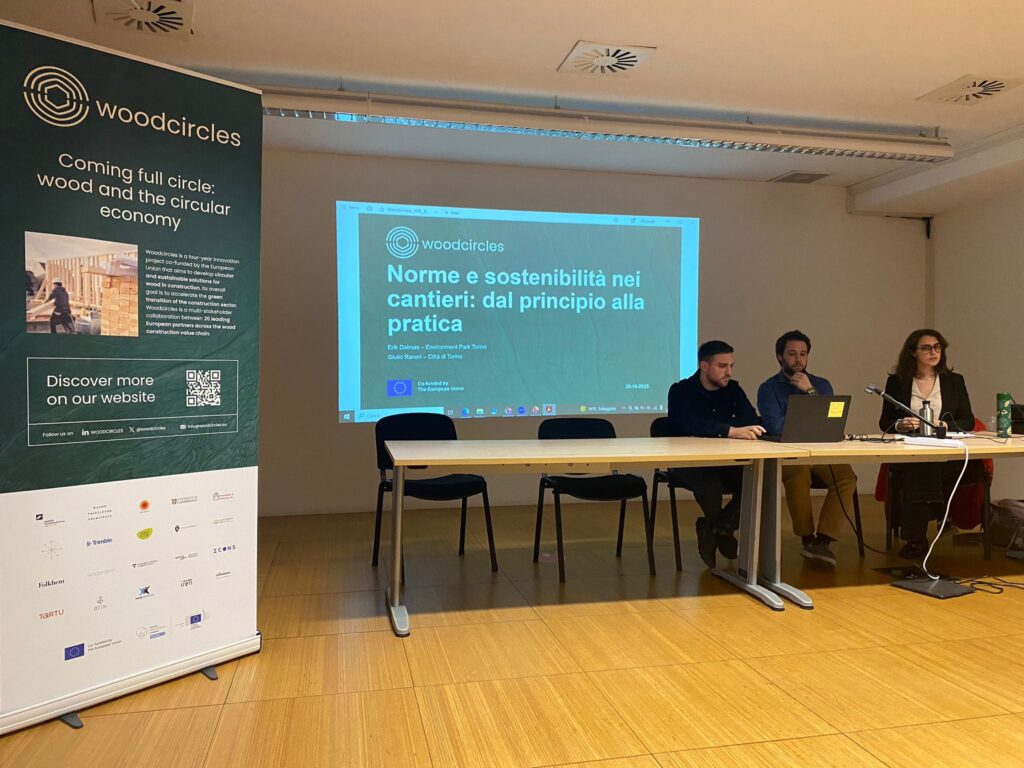
Presentation during the Woodcircles workshop in Turin
Insights gathered from this workshop will contribute to shaping future project activities and developing a final strategy to support the city’s transition toward a more circular construction sector, ultimately increasing the value of locally reclaimed wood.
The workshops in Tartu and Turin demonstrated the importance of participatory processes in shaping realistic and impactful circular strategies for the construction sector. By engaging diverse stakeholders, mapping challenges, and highlighting both local expertise and ongoing innovation, these sessions have laid a solid foundation for the next stages of the project. The insights collected will directly inform upcoming activities and the development of tailored action plans, strengthening each city’s capacity to increase the value of reclaimed wood and accelerate the transition toward a more circular and sustainable urban future.