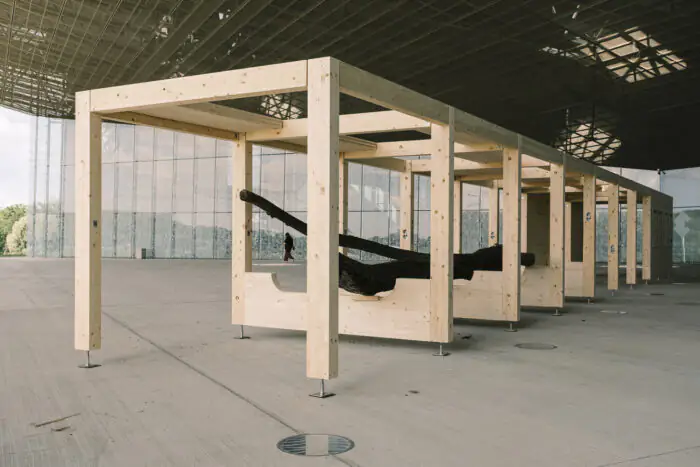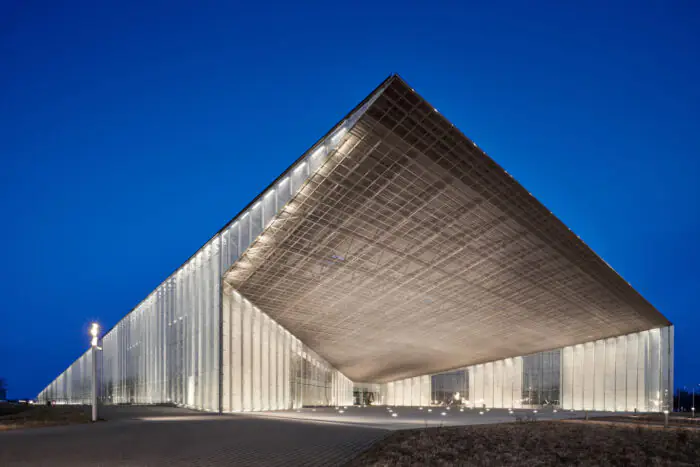

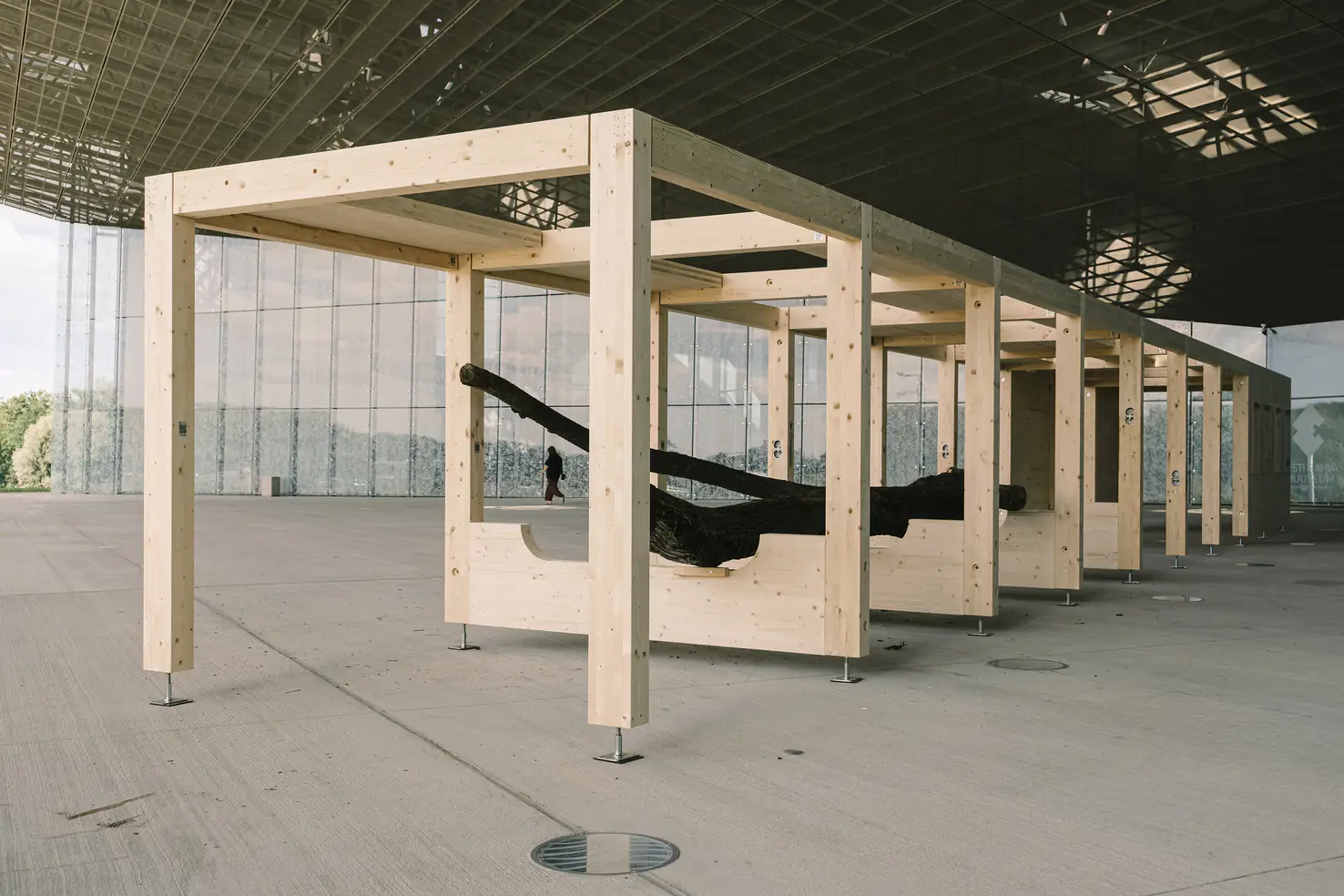
Currently installed at the Estonian National Museum, the demonstrator offers a tangible example of how timber construction can move towards a more circular model, where building components are designed not for a single use, but for multiple lives.
WOODCIRCLES is a four-year European research project exploring how timber can be recovered, reused and kept in circulation within the construction sector. Bringing together expertise from across the value chain, the project investigates new approaches to material recovery, component-based construction, reuse and Design for Assembly and Disassembly.
The Travelling Demonstrator puts these principles into practice.
A building designed for multiple lives
Developed by Waugh Thistleton Architects in collaboration with the WOODCIRCLES project partners, the pavilion is based on a modular kit of mass-timber components, including GLT columns and beams and CLT wall panels.
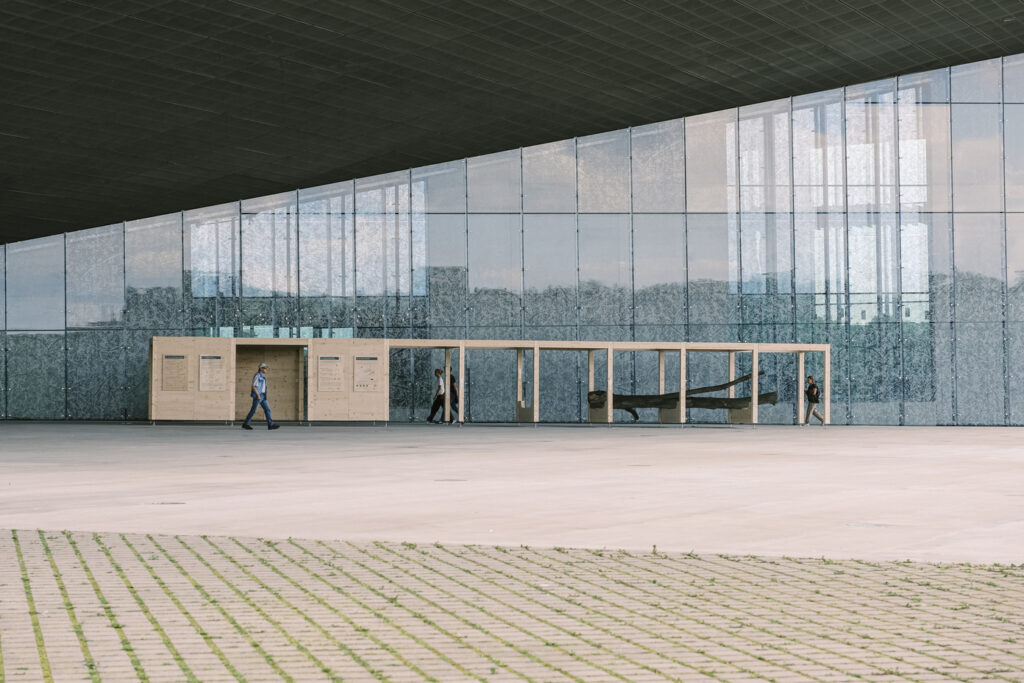
Its construction combines new timber with directly reused structural elements and panels incorporating timber recovered from demolition. Reversible connections allow individual components to be assembled, dismantled and reconfigured repeatedly, helping extend their useful life beyond a single building or application.
In this way, the demonstrator explores a different approach to construction: one in which buildings can be conceived from the outset as material banks, with components that retain their value and can be recovered and used again across multiple life cycles.
From Tartu to Turin and Rotterdam
Tartu represents the first full assembly and disassembly test of the Travelling Demonstrator system.
But the structure has been designed to move.
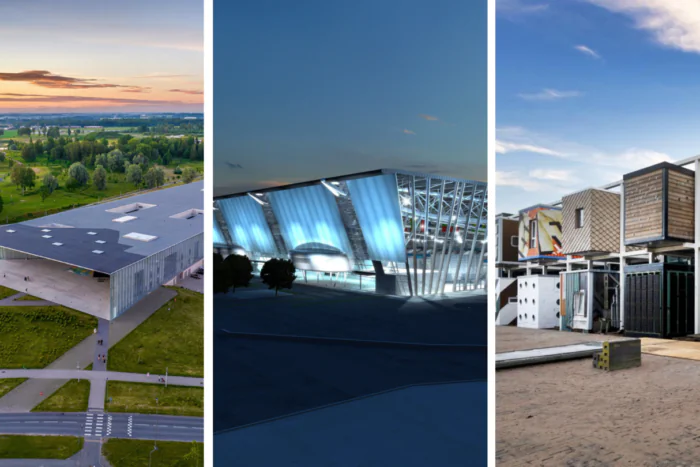
Following its stay in Estonia, the same kit of parts will travel to Turin and Rotterdam, before completing its journey at the Danish Technological Institute in Denmark. At each stop, the components will be assembled in a different configuration.
This travelling journey provides the WOODCIRCLES team with an opportunity to test circular construction beyond theory, examining what happens to the same building components through manufacture, transport, assembly, use, disassembly and reuse in different locations.
Each iteration will therefore contribute new practical knowledge about how circular timber construction can work at building scale and how structures can be designed today with their next use already in mind.
Rethinking how we build during World Green Building Week
The installation comes at a particularly relevant moment. During World Green Building Week 2026, organisations and professionals across the building sector are reflecting on how the built environment can become more sustainable, resilient and ready for the future.
The WOODCIRCLES Travelling Demonstrator contributes to this conversation by addressing one fundamental question: what if the materials and components used in a building were never intended to become waste?
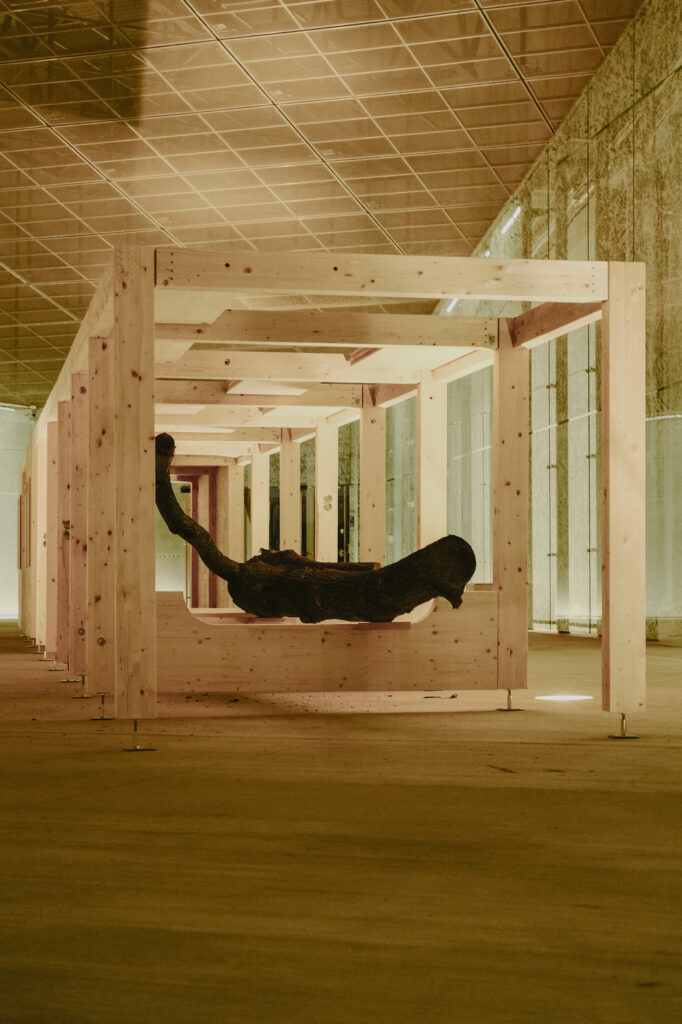
By combining recovered materials, reusable components, modular design and reversible connections, the demonstrator shows how circular principles can be embedded into the design process from the very beginning.
Its first iteration in Tartu marks an important milestone for WOODCIRCLES, transforming years of research and collaboration into a structure that can be assembled, experienced, dismantled and ultimately built again.
And Tartu is only the beginning of its journey.